
Dodge County Three-Day Releases
No separate official Dodge County 72-hour release list was found. The sheriff instead links to an Inmates By Arrest Date feed that combines people marked RELEASED and CURRENTLY BOOKED. It can help reconstruct a three-day span, but it is not labeled as a rolling release window. Its date controls concern arrest dates, which are not the same as release dates.
A three-day review is still useful after a weekend or holiday because it catches status rows that a quick same-day check may miss. Read all result pages, then seek the formal release timestamp when the public fields do not establish whether departure fell inside the desired period.
Check Dodge County 72-Hour Releases
Begin at the Dodge County Sheriff's official Jail Population page. It frames the linked feed as jail-population and bond-arraignment information. The combined source demands a record-by-record check.
- Open the sheriff page and follow its Interop jail link.
- Search the name and review every matching row.
- Separate RELEASED from CURRENTLY BOOKED status.
- Use arrest date and days in jail only as clues, not release proof.
- Record the court, warrant description, and bond information.
- Ask the sheriff or court for the exact release event if the three-day boundary matters.
Use Released Last 24 Hours for a same-day focus. For a person missing from the visible rows, the main Dodge County search path distinguishes jail, GDC, VINE, court, and federal sources.
Dodge County 72-Hour Feed Fields
The public feed offers identity, custody, and case-routing facts. It does not display a clear release timestamp in the captured text. That gap is vital when measuring a three-day period.
| Field | Use in a three-day check |
|---|---|
| Name and Status | Match the person and distinguish RELEASED from CURRENTLY BOOKED. |
| Arrest Date | Shows the arrest event, not the day of release. |
| Days In Jail | Provides stay context but does not establish the legal calculation. |
| Total Bond | May help route a bond question, but does not prove bond-out. |
| Warrant, counts, statute, description, M/F | Identifies the charge row and misdemeanor or felony notation. |
| Court | Points toward the docket or clerk that may hold the disposition. |
| Sex, height, weight, address | Helps distinguish similar names. |
| Image controls, pagination | Shows photo functionality and that results continue across pages. |
A sheriff record may provide release date and time, type or reason if public, and transfer destination if public. Request those specific fields. A bond amount, “NOT SET,” or short stay cannot fill the gap.
Dodge County Weekend Release Checks
A 72-hour look is most helpful when offices close, court entries post later, or a status changes between checks. Yet the feed publishes no cadence. It should not be called real-time, hourly, or daily. Recheck the status and compare it with the court docket or agency response.
The sheriff explains that a detainee may post bond and leave pending court, remain until a court decision, serve a sentence, or transfer to a state facility. Each path can produce a local release without ending the case. A weekend bond-out may still have a later hearing. A transfer may mean the person remains confined elsewhere.
The GSCCCA Dodge County clerk listing identifies the Superior Court clerk and weekday access details.
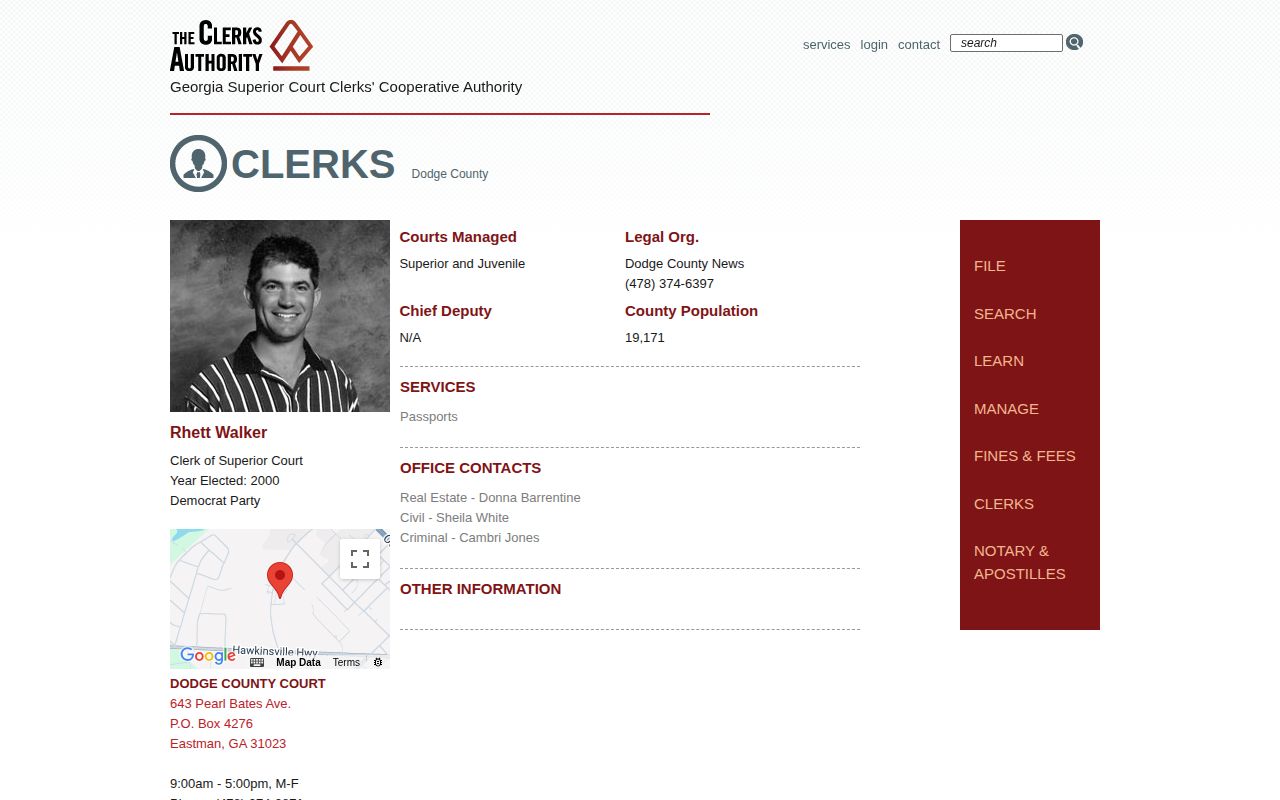
The clerk source is a durable follow-up when a weekend jail row does not explain the case result.
Note: A later docket entry may explain a weekend release even when the jail feed supplies only status and arrest information.
Dodge County Release Window Limits
The combined feed is the key local data quirk. On July 15, 2026, the research observation found 38 items over four pages, with June and July arrests and both released and current statuses. It proves recent released records can remain visible. It does not establish how long they remain.
A date-filtered arrest list cannot create an official release window. A person arrested before the three-day period could leave during it. A person arrested inside the period could remain booked. Therefore, use the feed to identify a status and the agency record to set the release time.
- Arrest window
- A range based on when arrests occurred.
- Release window
- A range based on when custody ended.
- Retention
- How long an older row remains available.
- Cadence
- How often a source refreshes its data.
Dodge County Release Destinations
A RELEASED label is scoped to Dodge County Jail. It may mean community release on bond, completion of a local sentence, a court order, or movement to another custodian. The public row does not reliably tell which. Check the court field and formal record before saying someone went home.
| Situation | Next source |
|---|---|
| Local bond or court release | Dodge County court docket and sheriff release record |
| Transfer to Georgia prison | GDC Find an Offender |
| Post-release parole or felony probation | Parolee Search and DCS Eastman Field Office |
| Custody-change alert | Georgia VINE |
| Federal or immigration indication | BOP, ICE, USMS, or federal court records as applicable |
Eastman YDC is a juvenile facility and should not be searched through adult roster or mugshot methods. Youth records require DJJ and authorized court channels.
Request Dodge County Release Proof
If the online rows cannot prove a 72-hour release, contact the Dodge County Sheriff's records route listed by county policy: 85 Industrial Blvd, Eastman, GA 31023, 478-559-1130, or tgraham@dodgecosheriff.com. Give the person's name, known arrest date, and the precise fields sought. Ask for booking data, release date and time, release type or reason if public, bond information, and transfer destination if public.
Georgia's open-records rule calls for available responsive records within a reasonable time not over three business days. If unavailable then, the agency should provide available records or a description and timeline. The county policy allows the first 15 minutes of employee work without charge and may charge later labor at the lowest-paid qualified employee's rate.
For the court path, the Clerk of Superior Court is at 643 Pearl Bates Avenue, P.O. Box Drawer 4276, Eastman, GA 31023, phone 478.374.2871. Ask for the docket, bond order, disposition, sentence, probation order, revocation, or release order as relevant. The court record may outlast the public jail row.
Older Dodge County Release Evidence
A three-day list answers a narrow timing question. Older proof may live elsewhere. The Dodge County Clerk site links to case search, court calendars, legal forms, GSCCCA, and COTT access. The charge row's Court field helps choose the right clerk route. Court material can show bond, dismissal, a plea, sentence, time served, probation, revocation, or transfer-related action after the jail feed changes.
If the person entered Georgia prison custody, GDC Find an Offender is the state path. GDC says its search may use description, name, ID, or case number and may show charges, facility location, a photograph when available, and a release date. GDC also warns that its public information should be verified by written correspondence with Inmate Records and Information at P.O. Box 1529, Forsyth, GA 31029.
Someone released on parole may appear in the State Board of Pardons and Paroles database, which can return parole begin date, parole end date, parole office, office number, and primary offense. The DCS Eastman Field Office serves Dodge County for felony community supervision, even though its listed office address is in McRae-Helena. Those systems do not turn the Interop feed into a 72-hour list. They explain what followed local custody.
Georgia VINE is most useful as a custody-change notification layer. It can support phone, online, mobile, email, text, in-app, and accessible notification methods where offered. An alert is not a court disposition. If a person left local custody under a hold or detainer, the receiving agency's locator must confirm the next status.
Older parole and discharge proof can also have a longer life than the jail display. The Georgia Archives retention schedule describes clemency actions as permanent records, including board decision sheets, parole certificates, conditional transfers, discharge orders, pardons, commutations, restoration-of-rights records, and revocation orders. That does not make every item instantly available online. It does show why a formal Board or archives path may answer an older status question when a three-day feed cannot.
Restricted records need care as well. Georgia's restriction process can limit public access without simply destroying the record. An absent row, search result, or docket item should not be turned into a firm claim about whether an arrest or release occurred. Ask the agency or court what can lawfully be provided.